Exploring the intersection of Self Mastery, Engineering, Leadership, and Frameworks.
A space for deep insights, practical wisdom, and continuous growth.
Be YOU ✌️ . Be KIND ❤️ . Lets GO 🚀
Exploring the intersection of Self Mastery, Engineering, Leadership, and Frameworks.
A space for deep insights, practical wisdom, and continuous growth.
Be YOU ✌️ . Be KIND ❤️ . Lets GO 🚀
Behavioral interviews have become a staple in modern hiring processes, as they delve into candidates’ past experiences and actions to assess their traits and abilities. The STAR (Situation, Task, Action, Result) or SAR (Situation, Action, Result) method is widely recognized and effective for structuring responses in these interviews. It provides a clear framework for presenting one’s experiences. Based on my experience conducting and participating in behavioral interviews, I have identified two crucial pieces of information that can enhance responses: Context and Learnings. Including these elements, either as part of or in addition to the STAR format, can provide valuable insights. Towards the end of an interview, I often ask candidates the question, “Given the same scenario, what would you do differently?” This allows for an understanding of how the learnings can be applied back. In his book “Raising the Amazon Bar,” Eric Hudson also suggests touching on the long-term impact of actions, which I find further enriches the response. ...
Many times, I see managers hold on to this idea of owning the team and focusing solely on working with their team members. You own the outcome of your team, and your outward view helps them achieve that efficiently Sometimes, it is necessary to increase your team size to achieve the business outcome. This is especially true for growth companies, where rapid expansion may be required. Unfortunately, performance management and interviews often focus solely on the size of the team managed by the manager, rather than the actual outcomes the manager achieved. This approach fosters a cultural norm where the emphasis on team size takes precedence over the business impact. As a result, competition between peer managers’ team sizes becomes a significant factor, turning it into a zero-sum game. ...
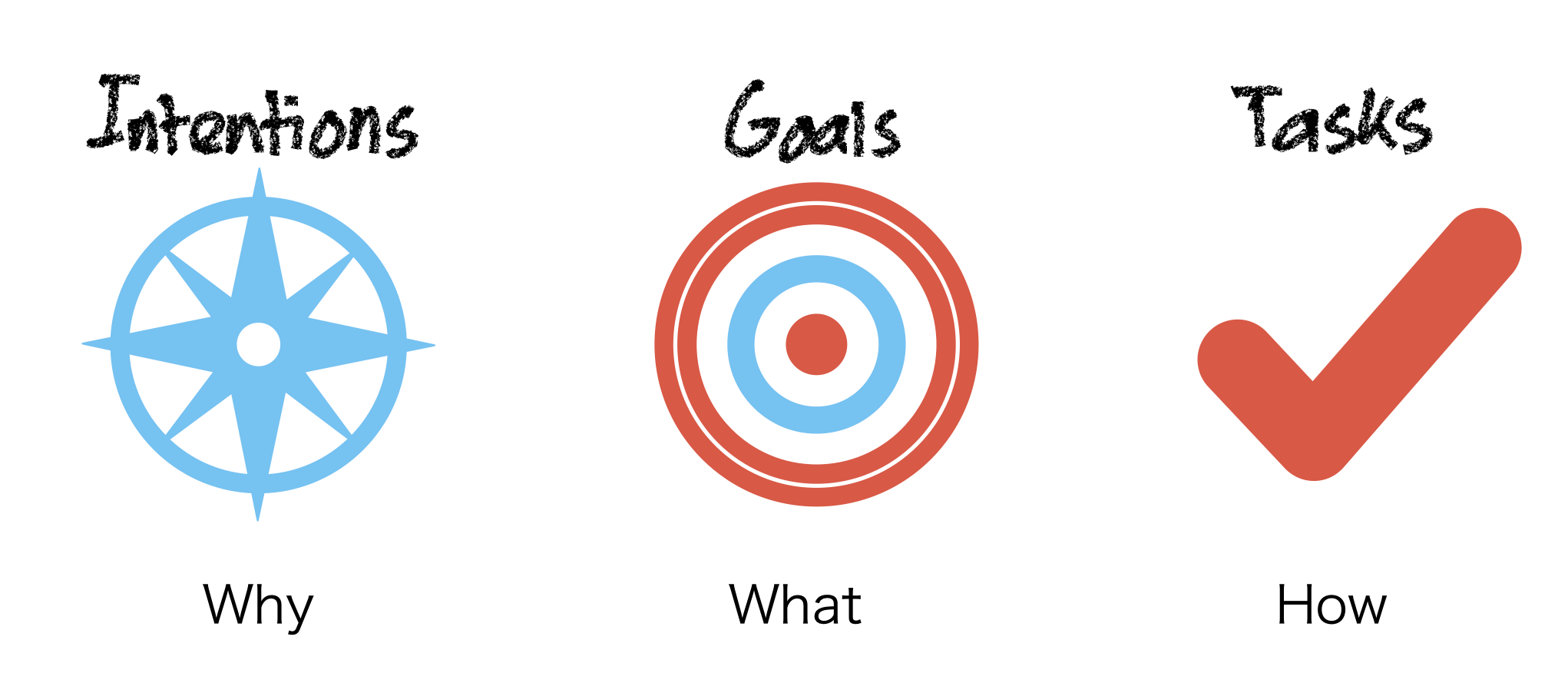
There is a lot of literature about goals and the goal-setting process, which is seen as the foundation for achieving results and success. However, there is also a growing concern about burnout, both in the corporate world and in personal lives. Could it be that we are working more? Is it the non-stop grind that is causing this? Or perhaps it’s the constant changing of your goals without a clear understanding of why we are pursuing them. ...
There is a lot of talk about Sagas and using choreography versus orchestration. I have referenced a few of them below. Having done this a few times with actual implementations, here are some of my thoughts. Let’s start with a customary definition of what sagas are: The saga design pattern is a way to manage data consistency across microservices in a distributed transaction scenario. -microsoft Assuming you have done the pre-work on why microservices are the best approach for your organization, used Domain-Driven Design concepts to identify your subdomains or bounded contexts, and aligned your organization around them, you will end up with a bunch of services within one bounded context (like the colored ones at the start of this post). Now you are trying to ensure that your architecture is loosely coupled, failure-resistant, handles distributed transactions, scales with traffic, etc. ...